Your Lucky Number Is Costing You: The Hard Truth About Numeric Superstition at the Casino
When a Number Feels Like a Sure Thing
Everybody's got one. Maybe it's 7 because your dad always said it was lucky. Maybe it's 999 because the repeating digits feel powerful, almost cosmically significant. Maybe it's the day you were born, or the address of the first apartment you actually loved. Whatever the origin story, the number feels like yours — and at the casino, that sense of ownership can quietly become your biggest liability.
This isn't about shaming anyone's rituals. Casino culture is built on a certain kind of magic, and the superstitions players carry to the table are part of what makes the whole experience feel alive. But there's a meaningful difference between enjoying a number as a personal tradition and genuinely believing it changes the odds in your favor. One is harmless fun. The other is a psychological trap that costs real money.
The Brain's Pattern Problem
Human beings are pattern-recognition machines. It's one of our most impressive evolutionary features — and one of our most exploitable cognitive quirks. When we see a number come up twice in a row at roulette, our brains immediately start constructing a story. It's running hot. It's my number. Something is happening here. The problem is that casino games, particularly those built on random number generation, don't care about your narrative.
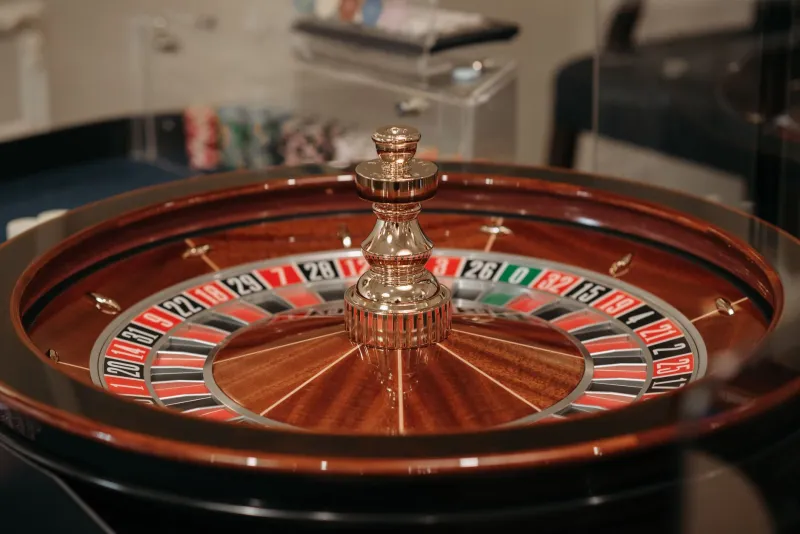
A roulette wheel has no memory. The slot machine that just paid out a modest win on the 9 line doesn't "know" it owes you a bigger one. Each spin, each deal, each roll is statistically independent of everything that came before it. The concept is called independence of events, and it's the foundation of how casino probability actually works. Your lucky number doesn't bend this rule. Nothing does.
Yet the emotional pull is real, and that's precisely what makes numeric superstition so financially dangerous. When you're convinced a particular number is on your side, you tend to bet more on it, chase it when it hasn't shown up in a while, and feel irrationally validated when it eventually does appear — even if you've already lost twice as much waiting for it.
The 7 Myth and the 999 Effect
In American casino culture, 7 might be the most loaded digit in existence. It's baked into slot machine iconography, embedded in craps lore, and culturally reinforced through decades of advertising and pop mythology. Players genuinely believe 7 is a "good" number, and that belief shapes how they bet.
Here's the reality: in most casino contexts, 7 is just a symbol. On a standard slot machine, the odds of landing any specific combination are determined by the game's programming — the RNG (random number generator) — not by the cultural weight of the symbols involved. A triple-7 jackpot isn't more likely because seven is lucky; it's as likely (or unlikely) as the math of that specific machine allows, regardless of how you feel about the number.
The 999 pattern carries its own mystique. Repeating digits feel significant to a lot of players — there's something visually satisfying about triple numbers, something that reads as intentional rather than random. But three nines appearing on a reel is a mathematical outcome, not a cosmic signal. The sequence is only as meaningful as the paytable says it is.
None of this means you should stop finding these numbers interesting or fun. It means you should stop letting them influence how much you wager.
How Superstition Distorts Betting Behavior
The real financial damage from numeric superstition tends to show up in a few specific patterns:
Overcommitting to "hot" numbers. When a number appears frequently over a short window, players interpret it as a trend and increase their bets accordingly. This is the gambler's fallacy working in reverse — instead of assuming the number is "due" to stop, they assume it's on a roll. Neither interpretation reflects how probability actually operates.
Avoiding statistically favorable bets. This one is sneaky. Some players will bypass a bet with genuinely good odds because the associated numbers don't feel right to them. In games where strategy matters — blackjack, certain video poker variants — this kind of emotional filtering can meaningfully increase the house edge against you.
Chasing losses on favored numbers. If your number hasn't come up and you've already lost more than you planned, superstition can convince you that the next spin is the one. You've already invested emotionally. The number owes you. This is where small losses become significant ones.
What to Focus on Instead
The good news is that replacing superstition with strategy doesn't mean turning your casino time into a joyless math exercise. It just means anchoring your decisions to information that actually matters.
Learn the house edge on your games. Every casino game has a built-in mathematical advantage for the house. Blackjack with basic strategy typically runs a house edge under 1%. American roulette sits around 5.26%. Many slot machines operate at a higher edge than that. Knowing these numbers — the ones that actually affect your outcomes — is far more useful than any birthdate or repeating digit.
Set loss limits before you sit down. Decide in advance how much you're willing to lose in a session, and treat that number as a hard stop. Superstition tends to thrive in the emotional heat of the moment; a pre-set limit removes some of that vulnerability.
Let your rituals be rituals. There's nothing wrong with having a lucky number as part of your casino experience. Plenty of serious players have personal traditions — a specific seat, a particular bet they always make first, a number they enjoy playing. The key is keeping that ritual in the entertainment column, not the strategy column. Enjoy it for what it is: a fun piece of personal mythology that has no bearing on the math.
The Paradox, Explained
Here's the central irony of numeric superstition: the stronger your belief in your lucky number, the more it tends to cost you. That belief pushes you toward irrational bet sizing, emotional chasing, and selective memory (you remember the times your number hit; you quietly forget the sessions it didn't). It feels like confidence, but it functions like a leak in your bankroll.
At DF999i Casino, we think the most interesting number in the room isn't the one you were born on or the one that feels cosmically significant. It's the house edge on your chosen game, the size of your session bankroll, and the point at which you walk away. Those are the numbers that shape your actual results.
Your lucky number can still be part of the experience. Just don't let it be the one making your decisions.