Why We Pick the Numbers We Pick: The Real Psychology Behind Lucky Digits at the Casino

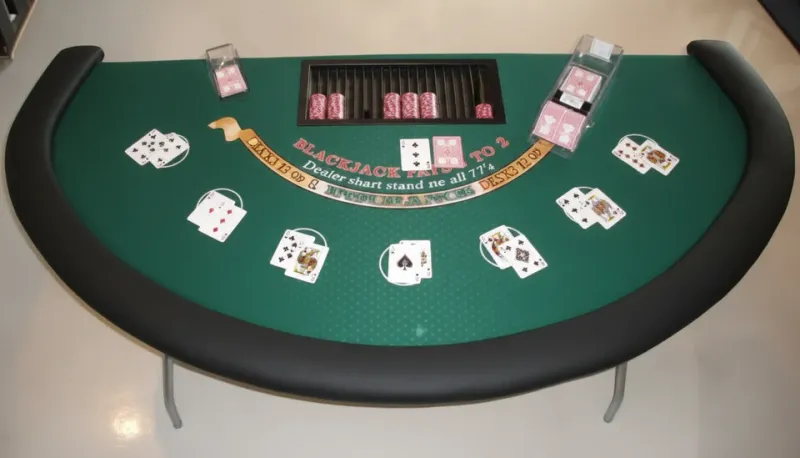
Photo: joergens.mi, CC BY-SA 4.0, via Wikimedia Commons
Walk into any casino floor — physical or digital — and you'll notice something almost immediately. Players aren't just spinning reels or placing chips at random. They're choosing. Birthdays. Anniversaries. That one number that came up three times in a row last Thursday. At DF999i Casino, we've seen it all, and honestly? We get it. The relationship between humans and numbers runs way deeper than most people realize.
So let's unpack it. Where does the idea of a "lucky number" actually come from, and what does modern psychology say about why we lean on specific digits when real money is on the line?
It Starts in Childhood (Seriously)
Researchers in cognitive psychology have long noted that number preferences form early in life. A 2014 study published in Frontiers in Psychology found that people develop emotional associations with numbers through repeated personal experiences — your birth date, your jersey number in Little League, the address of your childhood home. These associations stick.
By the time someone sits down at a roulette wheel or logs into their favorite online casino, they're carrying a whole invisible backpack of numerical memories. Choosing "your number" feels less like superstition and more like identity. It's not that 23 is objectively lucky — it's that 23 means something to you.
This is what psychologists call the availability heuristic: we overestimate the significance of information that's easy to recall. If 17 came up on your last big win, your brain files that away as meaningful data, even if statistically it's just noise.
The American Obsession with 7
Ask any American what the luckiest number is, and most will say 7 without blinking. It's everywhere in US gambling culture — three 7s on a slot machine jackpot, Lucky 7s scratch tickets at every gas station, the 7 in craps that can make or break a shooter's run.
But why 7? The origins are genuinely fascinating. Seven appears across religious texts (seven days of creation), folklore (seven deadly sins, seven wonders of the world), and even neuroscience — cognitive scientist George Miller famously argued that the human brain can hold roughly seven items in short-term memory at once. We're wired to find 7 significant.
Casinos have leaned into this hard, and honestly, they'd be foolish not to. At DF999i Casino, you'll see the number baked into everything from promotional structures to game themes — not because 7 wins more often, but because it feels like it should.
Cross-Cultural Lucky Numbers: A Quick American Primer
The US is one of the most culturally diverse gambling markets in the world, and that diversity shows up in how different communities approach lucky numbers.
Chinese-American players often gravitate toward 8, which sounds like the Mandarin word for prosperity (bā). You'll notice this in high-roller behavior at baccarat tables in Las Vegas, where 8 is treated with serious reverence. The number 4, on the other hand, sounds like the word for death in several Asian languages and tends to be avoided.
Italian-American communities have traditional ties to 13 as a lucky number — the opposite of mainstream American superstition, where 13 is considered cursed (hence why many buildings skip the 13th floor entirely).
Jewish cultural tradition assigns special significance to 18, which corresponds to the Hebrew word chai, meaning life. It's a number associated with good fortune and blessings.
This cross-cultural patchwork means that on any given day at a diverse casino environment, the "luckiest" number in the room depends entirely on who you ask.
Numerology: Fringe Belief or Useful Framework?
Numerology — the practice of assigning mystical significance to numbers — sits in interesting territory. Most mathematicians and statisticians roll their eyes at it. And from a pure probability standpoint, they're right to. In a fair random number generator (which every legitimate online casino uses), no number has a higher probability of appearing than any other.
But here's the thing: numerology isn't really about probability. It's about ritual and focus. Many experienced players use numerology not because they believe it changes the odds, but because having a systematic approach to number selection gives them a sense of control and calm. That psychological steadiness? It actually matters — especially in games with a skill component like poker or blackjack, where emotional regulation directly affects decision quality.
So while picking your "life path number" from a numerology chart won't make the roulette ball land where you want it, the ritual of choosing intentionally might help you stay grounded at the table.
The Gambler's Fallacy: When Lucky Numbers Become a Trap
Here's where we have to get real with you. The flip side of lucky number thinking is the gambler's fallacy — the mistaken belief that past outcomes influence future independent events. If red has come up eight times in a row at roulette, your gut screams that black is "due." It isn't. Every spin is statistically fresh.
The same trap applies to number selection. Just because your lucky number hasn't appeared in 20 spins doesn't mean it's "building up" to a big appearance. Random systems have no memory. This is one of the most important concepts any casino player can internalize.
At DF999i Casino, we're always going to be straight with you: number selection does not change your odds in chance-based games. What it can do is give you a more engaging, personally meaningful experience — and there's genuine value in that.
So Should You Play Your Lucky Number?
Absolutely — as long as you understand what it is and isn't doing for you. Playing numbers that carry personal significance makes the experience more fun, more immersive, and more yours. That's a real benefit.
Just don't let superstition push you toward irrational betting behavior, like chasing a number that "hasn't hit yet" or increasing your wager because you feel a win is overdue. Keep your bankroll strategy grounded in math, and let your lucky number be the cherry on top — the ritual that makes the game feel special rather than the strategy that guides your spending.
At the end of the day, the luckiest number in any casino session is the one you walk away with in your pocket. Play smart, play intentionally, and let the numbers be part of the story — not the whole plot.