Zero to Table-Ready: A 90-Day Playbook for Owning Your Spot in Live Casino Action

Photo by Photo by Aidan Howe on Unsplash on Unsplash
Let's be real for a second. Walking up to a live table game for the first time is intimidating in a way that pulling a slot handle just isn't. Slots don't judge you. Slots don't have other players watching while you fumble with your chips. Slots don't have dealers who've seen ten thousand hands and can tell in about four seconds whether you know what you're doing.
Table games, though? They're worth the discomfort. The engagement level, the strategic depth, the social energy — it's a completely different experience, and once you find your footing, you'll wonder why you waited so long.
This 90-day progression is built for US players who are ready to make that transition — whether you're coming from online slots, video poker, or just general curiosity. Think of it as your personal roadmap from "please don't notice me" to "yeah, I've got this."
Days 1–30: Learn the Language Before You Step on the Floor
The single biggest mistake new table players make is showing up without the vocabulary. You don't need to be an expert on day one — nobody expects that — but walking in without knowing basic terminology is like starting a new job without knowing what the company does. It slows everything down and signals inexperience immediately.
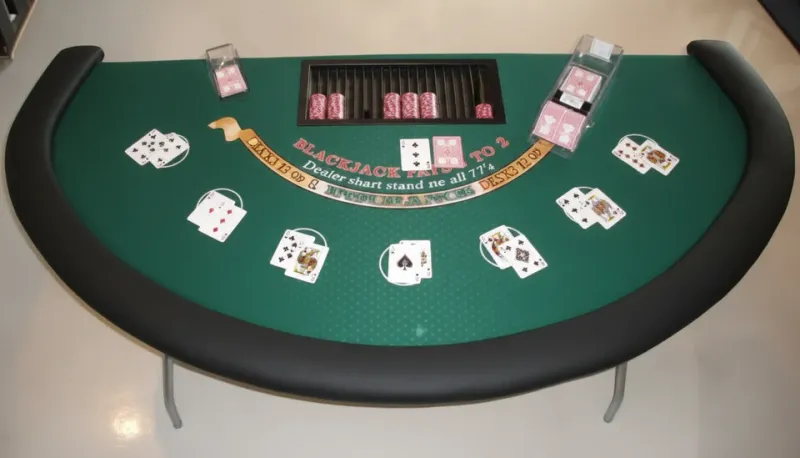
Start with one game. Don't try to learn blackjack, craps, roulette, and baccarat simultaneously. Pick one and go deep. For most beginners, blackjack is the smartest starting point. The rules are relatively straightforward, there's a well-established basic strategy chart that's perfectly legal to reference, and the house edge is among the lowest of any table game when you play correctly — typically around 0.5% with proper strategy.
Study the basic strategy chart. This isn't optional — it's the foundation. A blackjack basic strategy chart tells you mathematically the best play for every possible hand combination against every possible dealer upcard. You can find these online for free, and many casinos will actually let you use a physical reference card at the table. Print one out, study it, quiz yourself.
Learn the table etiquette before you sit down. This is where most guides fall short. Here's what you actually need to know:
- Don't touch your bet once the hand starts. This is a casino security rule, not just etiquette. Once cards are dealt, your chips stay put.
- Use hand signals, not just words. In live blackjack, you tap the table to hit and wave your hand to stand. Verbal-only communication causes confusion and can lead to disputes.
- Don't give unsolicited advice to other players. Even if you see someone making a clear mistake, keep it to yourself unless they ask. This is a fast way to become unpopular at the table.
- Know how to buy in. Wait for a break between hands, place your cash on the table (don't hand it directly to the dealer), and let them count it out. Don't put cash in the betting circle.
- Tip your dealer. It's standard practice in US casinos. You can tip by placing a bet for the dealer in front of your own bet, or by handing chips directly after a hand.
Use online simulators to practice. DF999i Casino's online platform is a great place to run through hands without any pressure. Play at your own pace, reference your strategy chart freely, and get the decision-making process into your muscle memory before you ever sit at a live table.
Days 31–60: Get on the Floor and Start Building Reps
This is the phase where everything you studied meets the reality of a real casino environment, and it's also where most people stall out. The key is managing your expectations. You're not going to feel smooth and confident in your first few live sessions. That's completely normal and completely fine.
Choose your table deliberately. Look for lower minimum tables — $5 or $10 minimum bet tables are common at many US casinos and give you room to play without burning through your bankroll while you're still getting comfortable. Also look for tables that aren't packed. A full table of seven players moves faster and gives you less time to think between hands.
Go during off-peak hours. Weekday afternoons are ideal. The floor is quieter, dealers are less rushed, and the social pressure is significantly lower. Many dealers will actually slow down and help walk you through decisions during slow periods — just ask.
Bring a session bankroll you're comfortable losing. For table game beginners, a session bankroll of 20–30 times your minimum bet is a reasonable guideline. If you're playing a $10 table, bring $200–$300 for the session. This gives you enough runway to ride out variance without going broke in the first thirty minutes.
Focus on process, not results. During this phase, your goal isn't to win — it's to execute correct strategy consistently and get comfortable with the pace and environment. Wins are great, but a session where you played every hand correctly and lost is more valuable for your development than a session where you played sloppily and got lucky.
Introduce a second game in the final weeks of this phase. Once blackjack starts feeling natural, spend some time studying a second game. Baccarat is an excellent choice — it has very simple player decisions (essentially just choosing which side to bet), a low house edge on the banker bet, and a relaxed pace that's friendly to newer players.
Days 61–90: Sharpen Your Edge and Own the Room
By this point, you've got the fundamentals down and some live reps under your belt. This final phase is about refinement — tightening your strategy, developing your table presence, and starting to think like someone who plays regularly.
Audit your play. After each session, spend ten minutes reviewing the hands you're not sure about. Did you deviate from basic strategy? Why? Were those deviations justified or were they gut-feel decisions? Honest self-review accelerates improvement faster than almost anything else.
Start tracking your sessions. A simple note on your phone — date, game, buy-in, cash-out, duration — gives you real data about your play over time. Patterns emerge. You might notice you consistently perform better or worse at certain times, certain table sizes, or certain bet levels. This information is genuinely useful.
Expand your game selection. By day 60 or so, craps is worth exploring. It has the most intimidating table reputation in the casino, but the pass line bet with odds is one of the best wagers on the entire floor. Most casinos offer free craps lessons — take one. The learning curve is real but the payoff in entertainment value is enormous.
Work on your table presence. Confidence at a table isn't about being loud or showy — it's about moving with purpose. Know your bet before the round starts. Have your chips organized. Make your hand signals clearly. These small things signal to everyone at the table, including the dealer, that you're a player who knows what they're doing.
Set a clear bankroll strategy going forward. By the end of 90 days, you should have a defined approach: how much you're willing to lose in a session, what a winning session looks like for you, and when you walk away. This is the infrastructure that separates players who enjoy table games long-term from players who burn out.
The Real Milestone
At some point in this 90-day window, something will shift. You'll sit down at a table, the cards will start moving, and you'll realize you're not thinking about what to do — you're just playing. The mechanics are automatic, the environment feels familiar, and you're actually having fun instead of managing anxiety.
That's the milestone. That's the moment you've been building toward.
Your lucky number starts here at DF999i Casino. Ninety days from now, you'll know exactly what to do with it.