Your Brain Is Lying to You: The Science of Phantom Patterns at the Casino
Here's something that might sting a little: you're wired to be bad at gambling.
Not because you're reckless or uninformed. Not because you skipped math class. It's because your brain — the same one that helped your ancestors dodge predators and find food — is almost pathologically obsessed with finding order in chaos. And in a casino, where outcomes are genuinely, stubbornly random, that obsession doesn't just fail you. It actively works against you.
At DF999i Casino, we're big believers in playing smarter. So let's dig into one of the most fascinating and costly cognitive traps in gaming: the phantom pattern problem.
What Your Brain Does When It Gets Bored of Randomness
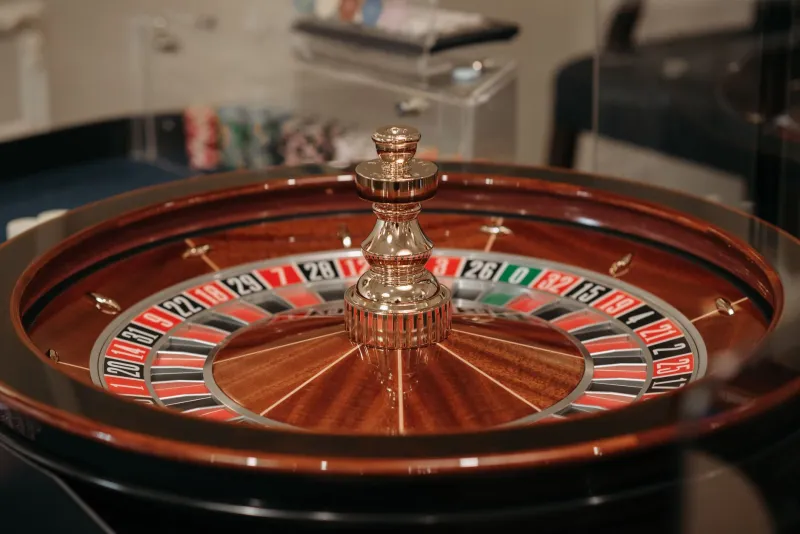
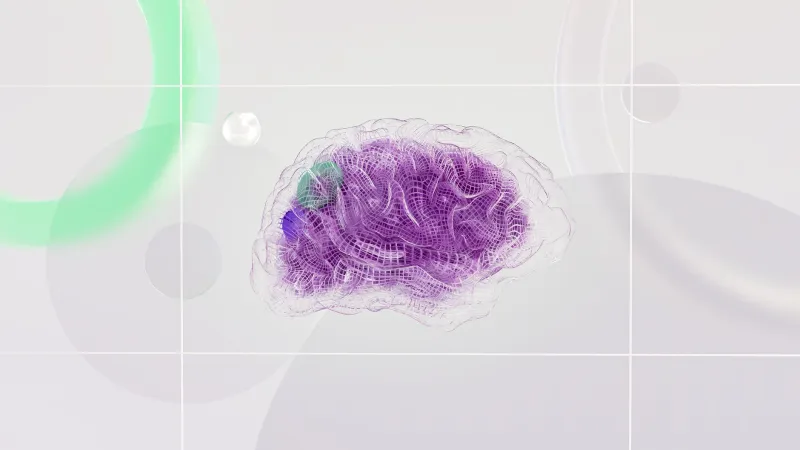
Neuroscientists have a term for your brain's compulsive need to detect patterns: apophenia. It's the tendency to perceive meaningful connections between unrelated things. Seeing faces in clouds. Hearing hidden messages in music played backward. Deciding that because red came up six times in a row on roulette, black is "due."
This isn't a character flaw. It's deeply embedded in how the human brain processes information. The prefrontal cortex — the region responsible for decision-making — actively searches for predictive patterns because, evolutionarily speaking, pattern recognition kept us alive. Noticing that rustling in the bushes usually meant danger was a survival skill. Noticing that the roulette wheel "always" hits 17 after a run of even numbers? That's the same mechanism, wildly misfiring.
Research published in Nature Neuroscience found that the brain releases dopamine not just when we receive a reward, but when we anticipate one based on perceived patterns. In other words, the act of spotting what you believe is a pattern feels genuinely good — chemically good — even when that pattern is a complete illusion.
The 999 Problem: Why Repeating Numbers Feel Significant
Take the number 999 — the kind of triple-digit sequence that feels loaded with meaning. Slot players who see 9-9-9 flash on a near-miss feel a jolt of recognition, a sense that something almost happened. Roulette players who watch a number repeat twice start mentally rehearsing their bet for the third spin. Poker players who've been dealt a pair of nines twice in a night start wondering if the universe is sending a message.
It isn't. But here's the uncomfortable part: your brain doesn't care.
The reason repeating digits feel significant is rooted in what psychologists call the clustering illusion — the tendency to see streaks or clusters in random data as intentional rather than statistically inevitable. If you flip a coin 100 times, you're almost certain to see runs of five or six consecutive heads. Those runs aren't signs of a biased coin. They're just what randomness actually looks like. But to a human brain watching in real time, they feel like a signal.
Casinos — consciously or not — are built to amplify this feeling. Slot machines display your last several outcomes. Electronic roulette boards show the history of recent spins. Digital poker platforms highlight hand histories. All of this data is, statistically speaking, irrelevant to your next outcome. But it gives your pattern-hungry brain exactly what it craves: raw material to build a theory.
How Casinos Quietly Lean Into Pattern Thinking
Let's be clear — reputable casinos aren't running a con. The house edge is real, disclosed, and doesn't require deception. But the design of casino environments does tend to cater to the way human brains naturally work, and pattern-seeking is a big part of that.
Think about these common features:
- Big number boards at roulette tables showing the last 15-20 results, color-coded by red and black. There's no mathematical reason to display this information. Its primary function is to give players something to analyze.
- Near-miss mechanics on slots, where two jackpot symbols land and the third just barely misses. Research from the University of Waterloo found that near-misses activate the same neural circuits as actual wins — they make players feel closer to success and more motivated to keep playing.
- Sequential jackpot displays that count upward in real time, creating a sense of inevitability — like the jackpot has to hit soon because it's been building so long. (Spoiler: it doesn't.)
None of this is sinister. But understanding it gives you a real edge.
Sequential Numbers and the "Hot Streak" Trap
One of the most persistent phantom patterns in casino gaming is the belief in hot streaks — the idea that a player, dealer, or even a specific machine is "running hot" and should be followed or avoided accordingly.
This shows up everywhere. Craps players who trust a "hot shooter." Blackjack players who stick with a dealer who's been busting frequently. Slot enthusiasts who swear certain machines pay more at certain times of day or after certain intervals.
The math here is unambiguous: in games of independent outcomes (slots, roulette, most casino staples), what happened before has zero effect on what happens next. The dice have no memory. The RNG in a slot machine resets with every spin. The roulette ball doesn't know it just landed on red.
But here's the kicker — even players who know this intellectually still feel the pull. A 2010 study in Psychological Science found that people continued to predict patterns in explicitly random sequences even after being told the sequences were random. Knowing the truth doesn't fully override the instinct. That's how deep this goes.
Practical Moves to Outsmart Your Own Brain
You can't rewire your neurology before your next session, but you can build habits that create distance between your instincts and your bets.
1. Treat every outcome as isolated. Before placing a bet, ask yourself: "Am I basing this on what just happened?" If the answer is yes, pause. Recent history in a random game is entertainment, not data.
2. Set your strategy before you sit down. Decide in advance which games you'll play, what your bet sizes will be, and when you'll walk away. A pre-committed plan is far harder for pattern-thinking to hijack than in-the-moment decisions.
3. Keep a brief session log. Jot down your wins and losses in real time. Seeing the actual numbers in front of you makes it harder to construct a comfortable narrative around what's "really" happening.
4. Name the pattern out loud. When you catch yourself thinking "this machine is due" or "the shooter is on fire," say it out loud or write it down. Verbalizing a flawed belief makes it easier to evaluate critically rather than just acting on it.
5. Embrace variance as the point. Randomness isn't a bug in casino gaming — it's the entire feature. The unpredictability is what makes every spin, every deal, and every roll genuinely exciting. Accepting variance doesn't mean giving up; it means engaging with the game as it actually is.
The Smartest Pattern You Can Find
Here's the real pattern worth chasing: the one between smart, disciplined play and a more enjoyable, sustainable gaming experience. That connection is real, documented, and entirely within your control.
At DF999i Casino, we believe understanding the psychology of play makes you a better, more self-aware gamer — whether you're spinning slots, reading the board at roulette, or sizing up a poker hand. Your brain is always going to hunt for meaning in the numbers. The skill is knowing when to trust that instinct and when to quietly, firmly tell it to sit down.
The patterns you're seeing at the tables? Most of them don't exist. But the choice to play smarter? That one's very real.