The Number That Breaks the Bank: Unpacking Casino Win Limits and What They Really Mean
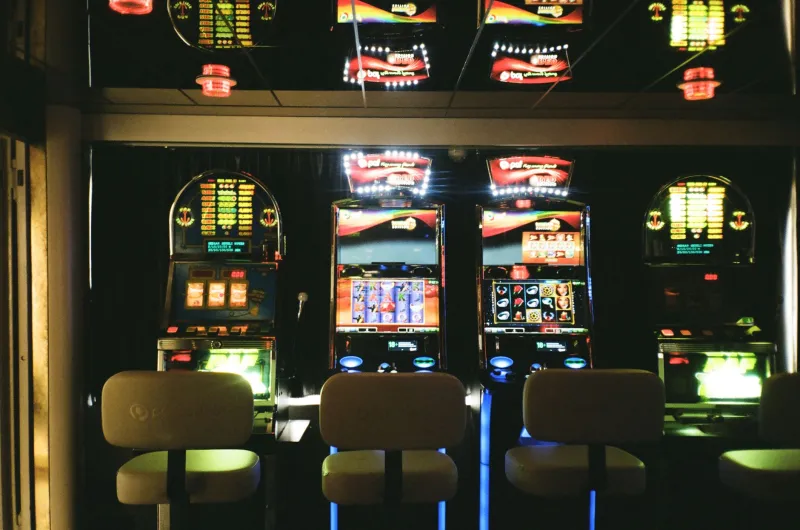
You're deep into a slot session, the reels are spinning, and something clicks. Big symbols line up. The machine goes wild with lights and sound. Then you check the payout screen and realize — the win was capped. Not by bad luck. By design.
Casinos set limits on what they'll pay out, and those limits aren't random. They're the product of regulatory requirements, actuarial math, and a surprisingly sophisticated understanding of how players think. And when you start looking closely at where those caps land, certain numbers keep showing up in ways that feel almost too deliberate to ignore.
Why Casinos Cap Payouts in the First Place
Let's start with the obvious question: why would a casino limit how much you can win? Isn't a big jackpot exactly what brings players through the door?
Yes — up to a point. But casinos operate on thin, carefully calculated margins. Every game is designed so that the house retains a specific percentage of all money wagered over time. That's the house edge, and it only holds up if the math stays predictable. A single massive payout can distort the expected return on a machine for months. To protect their models, operators build in maximum win thresholds that keep individual payouts within a range the house can absorb without breaking the bank — so to speak.
Beyond internal financial planning, there are also regulatory triggers to consider. In the US, the IRS requires casinos to issue a W-2G tax form for slot wins of $1,200 or more, and for certain table game wins that hit specific multiplier thresholds. This creates a practical incentive for operators to structure games so that the most common big wins land just below reporting lines — or so far above them that the paperwork is unavoidable but the player psychology has already been managed.
The 999 Question: Coincidence or Calculated?
Here's where things get genuinely interesting. If you browse payout tables at online and brick-and-mortar casinos, you'll notice that numbers like 999, 9,999, or 99,999 appear with striking regularity as maximum win multipliers or jackpot caps.
Is that a coincidence? Partly, but not entirely.
On one level, 999 is simply a round number that sits just under a psychological and mathematical boundary — 1,000. Humans process round numbers differently. We feel the gap between 999 and 1,000 as meaningful even though it's just one unit. Casino designers know this. A payout cap of 999x your bet feels enormous while technically staying under the threshold that would trigger a different tier of player expectation or regulatory scrutiny.
There's also a cultural dimension at play. In Chinese numerology — and Chinese-American gamblers represent a significant demographic in US casino markets — 9 is considered the luckiest single digit, associated with longevity and completeness. Triple 9s amplify that symbolism. A game with a 999x max payout isn't just mathematically convenient; it's culturally resonant for a broad slice of the player base.
So when you see 999 on a payout table, you're looking at a number that's doing a lot of work at once: it's financially manageable for the operator, it sits under psychological round-number resistance, and it carries enough symbolic weight to feel like a destination worth chasing.
Near-Miss Architecture and the Chase Effect
Win limits don't just affect what happens when you win — they shape the entire emotional arc of a session. This is where the concept of near-miss design becomes relevant.
Regulators in most US states require that slot outcomes be truly random. You can't program a machine to deliberately stop one symbol short of a jackpot. But the display of outcomes can still be engineered to feel tantalizing. When a machine shows two high-value symbols and then a third that's just slightly off, that's not manipulation — it's the natural result of weighted reel strips. High-value symbols appear less frequently, so near-misses involving them are statistically common even in a fair game.
The psychological effect is powerful. Players who almost hit a 999x payout don't think "I lost." They think "I was right there." That near-miss sensation activates the same reward pathways as an actual win in some neurological studies, which is part of why it drives continued play. The win ceiling becomes a beacon. You know exactly what you're chasing, and 999 is a number specific enough to feel attainable while large enough to feel transformative.
How Table Games Handle the Same Math
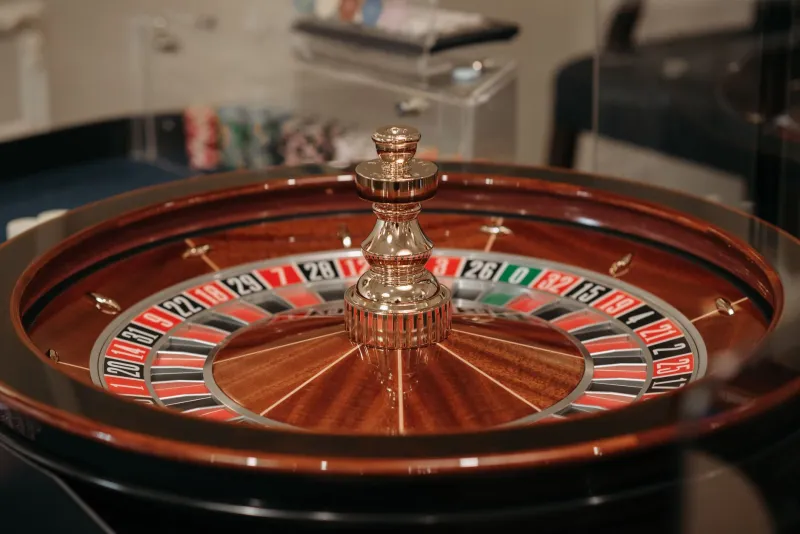
Slots get most of the attention in conversations about payout caps, but table games have their own version of this structure. Blackjack side bets often cap at fixed dollar amounts regardless of the base wager. Some progressive baccarat tables have jackpot tiers that reset after hitting specific thresholds. Even roulette, with its straightforward 35:1 payout on a single number, is subject to table maximums that limit how much a single bet can return.
In live casino settings, those table maximums are posted prominently — they're a feature, not a footnote. A $10,000 table maximum tells a high roller exactly what the ceiling is before they sit down. It manages expectations, limits variance for the house, and creates a framework within which the player can plan their session.
The interesting thing is that most casual players never bump into these limits. The caps exist at a level high enough that they're effectively invisible to anyone wagering at standard amounts. But the knowledge that a ceiling exists changes behavior even for players who'll never reach it. It defines the outer boundary of possibility, and that boundary shapes how ambitious or conservative a player feels during a session.
What This Means for How You Play
Understanding win limits and numeric thresholds isn't just trivia — it's useful context for anyone making decisions at the casino.
First, if a game advertises a specific max win (say, 5,000x your bet), that number is doing marketing work. It's designed to be impressive enough to attract action while remaining financially sustainable for the operator. Don't let a big number on a payout table override your read of the base game's return-to-player percentage. A 5,000x max win on a game with 85% RTP is a worse deal than a 500x max win on a game returning 97%.
Second, be aware of the near-miss effect. When you almost hit a threshold, your brain will interpret that as evidence that you're close. You're not. Each spin or hand is independent. The 999x payout doesn't get more likely because you've been playing for an hour.
Third, those regulatory thresholds matter. If you're playing in a US casino and you hit a win that triggers a W-2G, that's real paperwork and real tax implications. It's worth knowing those lines before you're sitting across from a casino host filling out forms.
The Number Is a Tool
At DF999i, we've always thought there's something worth examining in the way numbers anchor the casino experience. Our own brand identity plays with that — the 999 in our name isn't accidental. It's a nod to the way specific digits carry weight in gaming culture, for reasons that are equal parts math, regulation, psychology, and tradition.
When you see a number like 999 on a payout table, you're not just looking at a cap. You're looking at a decision that someone made deliberately — balancing what the house can afford against what the player will find compelling. That's the real game behind the game, and understanding it makes you a sharper player every time you sit down.