Cracking the Code That Can't Be Cracked: The Truth Behind Casino Betting Systems
The System That 'Never Fails' (Until It Does)
Talk to enough casino regulars and you'll eventually meet one. They've got a notebook. Maybe a spreadsheet. Possibly a laminated card tucked into their wallet with a sequence of numbers they've refined over months of play. Ask them about it and they'll lean in close, lower their voice, and tell you they've figured something out.
They haven't.
But here's the thing — they absolutely believe they have. And that belief, more than any roulette wheel or slot reel, is the most powerful force in the casino.
At DF999i Casino, we're all about helping players engage smarter. That means talking honestly about the stuff a lot of gaming sites gloss over. So let's dig into why betting systems feel so convincing, why numbers like 999 carry such psychological weight, and why the math behind every casino game is specifically designed to outlast every system ever invented.
How a Betting System Is Born
It usually starts with a win. A meaningful one. Maybe you bet on red after seeing black come up five times in a row, and red hit. Your brain registered that as cause and effect. It wasn't — it was coincidence — but the feeling of having predicted something is intoxicating.
From there, the system builds itself. You start tracking outcomes. You notice what feels like clusters. Black runs of four, five, six. A slot machine that seems to pay out every 30 spins. Craps tables where certain shooters seem to defy gravity. The brain is a pattern-recognition machine, and it is very bad at distinguishing real patterns from noise.
Psychologists call this apophenia — the tendency to perceive meaningful connections between unrelated things. It's the same cognitive quirk that makes us see faces in clouds or hear messages in static. In a casino environment, where there's money on the line and the stakes feel enormous, apophenia kicks into overdrive.
The 999 Effect: Why Certain Numbers Feel Like Keys
Numbers carry cultural and psychological baggage. In the US, seven is universally considered lucky — it shows up on slot machines, in Vegas signage, in everyday speech. But globally, and increasingly in American gaming culture, 999 has taken on a kind of mystical status.
Nine is considered powerful across numerous traditions. Triple nines feel like a ceiling, a maximum, a peak — the highest you can go before rolling back to zero. For players building systems, 999 becomes a kind of anchor number. Some use it as a betting unit cap. Others track wins until their total digits add up to 27 (2+7=9). A few treat any session where they're up by a multiple of nine as a signal to cash out.
None of this has mathematical merit. But it has enormous psychological merit, which is exactly what makes it dangerous.
When a system is built around a number that feels significant, every confirmation of that number gets logged in memory and every contradiction gets quietly discarded. That's confirmation bias in action — and it's one of the reasons players can run a flawed system for months before the losses pile up enough to shake their faith in it.
Real Players, Real Systems, Real Losses
Consider a scenario that plays out more often than casinos would probably like to admit. A player — let's call him Marcus — spends three months charting roulette outcomes at a local casino in Nevada. He develops a system based on betting in groups of nine spins, doubling down after any loss sequence that totals a digit sum of nine. He's convinced he's found a rhythm in the wheel.
For a while, it works. Or rather, variance works in his favor. He walks away up $400 one weekend, $600 the next. The system feels validated. He bets bigger.
Then the inevitable regression hits. In a single night, he loses $2,200. He assumes he made an error in execution — maybe he miscounted a sequence, or started his cycle on the wrong spin. He refines the system. He loses again.
Marcus's story isn't unique. It's practically a template. The wins feel like proof. The losses feel like bugs to be debugged. The system survives every failure because the player's belief in it is more resilient than the data against it.
Why the Math Doesn't Care About Your System
Here's the uncomfortable truth that every serious player eventually has to face: casino games are built on fixed mathematical edges, and no betting pattern changes those edges.
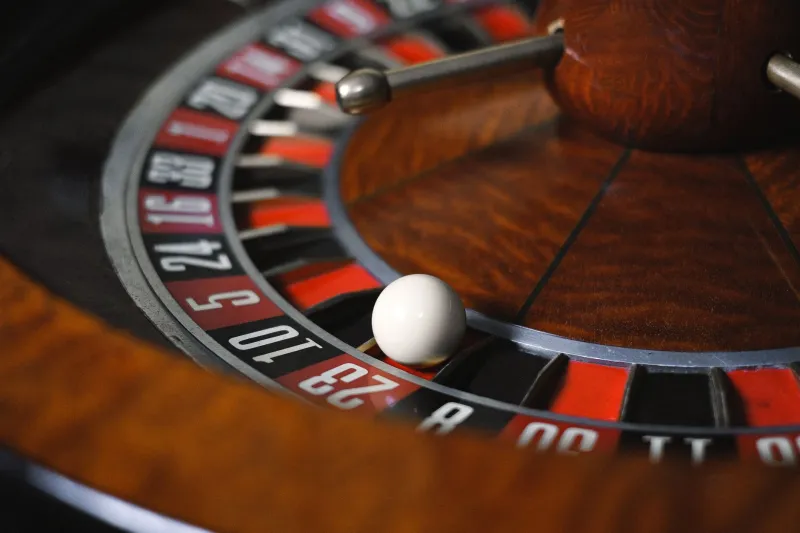
In American roulette, the house edge is 5.26% on most bets. That means for every $100 wagered over time, the house expects to keep $5.26. It doesn't matter if you bet in sequences of nine, reverse your bets after losses, or only play when the digital clock reads a multiple of 111. The edge is baked into the game's structure.
The Martingale system — doubling your bet after every loss — is probably the most famous betting system in casino history. It sounds bulletproof: keep doubling until you win, and you'll always recover. The flaw is table limits and bankroll limits. A losing streak of just ten hands requires a bet of over $1,000 if you started at $1. Thirteen hands in? You'd need to bet more than $8,000 to recover. The math doesn't care how long you've been playing or how elaborate your sequence is.
Systems that incorporate lucky numbers don't solve this problem — they just add a layer of emotional comfort on top of the same fundamental vulnerability.
The System Seller Economy
It's worth noting that the belief in casino systems isn't just a personal quirk — it's an industry. There are books, YouTube channels, Reddit threads, and paid courses dedicated to selling players on the idea that a particular number-based method can beat the house.
Some of these sellers are cynical. They know the math. They're selling hope to people who desperately want to believe.
Others are true believers — players who hit a lucky streak, convinced themselves their system caused it, and are now evangelizing based on a sample size that would make a statistician wince.
Either way, the product being sold is the same: the illusion of control in an environment specifically designed to be uncontrollable.
Play Smart, Not Superstitious
None of this means casino gaming isn't fun. It absolutely is. The thrill of a well-timed bet, the social energy of a live table, the satisfaction of a big session — these are real experiences worth having.
But they're best enjoyed with clear eyes. The smartest players at any casino aren't the ones with the most elaborate systems. They're the ones who understand the odds, set firm session limits, and treat wins as pleasant surprises rather than proof that they've cracked something.
At DF999i Casino, we think lucky numbers are great — as long as you know they're for fun, not for strategy. The number 999 might be your favorite. It might even show up on a winning spin tonight. But that's variance doing its thing, not the universe confirming your system.
The code was never there to crack. And knowing that? That's actually the smartest play you can make.