Dice Rituals, Lucky Seats, and the Comfortable Lie of Casino Control
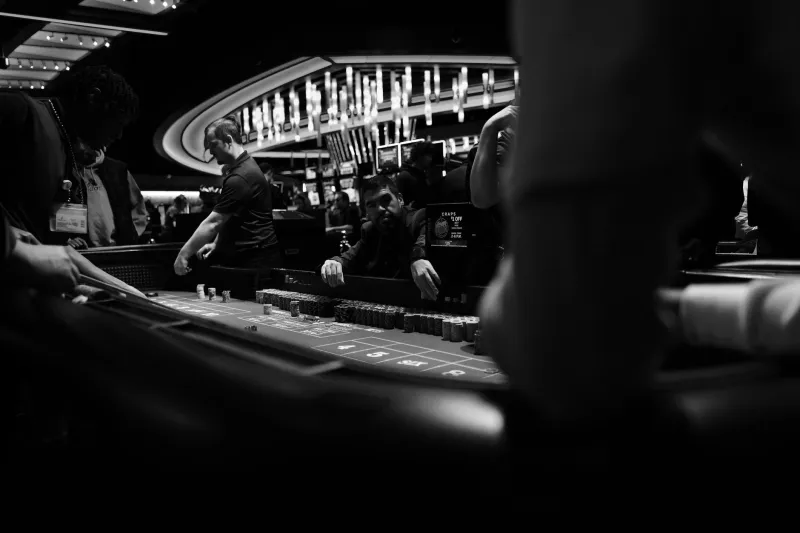
There's a guy at the craps table. Every single roll, he bounces the dice in his left palm exactly three times, whispers something under his breath, and releases them at a precise angle toward the back wall. He's been doing this for two hours. He's down $340. But he hasn't stopped, because somewhere in his mind, he's convinced the ritual just hasn't clicked yet.
Sound familiar? Maybe you've been that guy. Maybe you are that guy.
At DF999i Casino, we've built our whole identity around numbers — the thrill of sequences, the weight of digits, the way a single figure can feel like fate. But there's a difference between appreciating the culture of numbers and genuinely believing that tapping your chip three times before a roulette spin changes where the ball lands. One is fun. The other is a quiet trap.
Let's talk about that trap.
Where the Urge to Ritualize Comes From
Human beings are pattern-seeking machines. That's not an insult — it's evolutionary biology. For most of human history, recognizing patterns in the environment meant survival. The berries that made you sick last time? Avoid those. The hunting trail that worked twice before? Try it again.
The problem is that this same wiring gets dragged into environments where randomness is the entire point. A casino game doesn't have a pattern to find. A slot machine's RNG doesn't remember your last session. The roulette wheel has no memory of where it landed on spin number 47.
But your brain? Your brain desperately wants to find the thread. So when you win after blowing on the dice, or after betting your birthday number, the brain files that away as a causal relationship. You did a thing. A good outcome followed. Therefore, the thing caused the outcome.
Psychologists call this illusory correlation — the perception of a relationship between two unrelated events. It's the same mechanism behind superstition in sports, lucky socks before a big game, and yes, numeric rituals at the casino.
The Specific Power of Numbers
Numbers carry unusual psychological weight in gaming culture. Partly that's cultural — in Chinese-American communities, for example, 8 is deeply associated with prosperity, while 4 carries an ominous reputation. In Western settings, 7 holds an almost mythological status, woven into slot iconography and everyday speech alike.
But beyond cultural programming, numbers give rituals a sense of precision. If you just said "I have a good feeling about this spin," that's vague. But "I always bet 9 on the first spin of a new shoe" — now that sounds like a system. It sounds like you've done the analysis. It sounds like discipline.
That precision is part of the illusion. Specificity feels like knowledge. And knowledge feels like control.
The Control Paradox
Here's the core tension: casino games are specifically designed around outcomes you cannot control. That's the fundamental mechanic. The house edge exists because randomness is real, and randomness doesn't bend to ritual.
And yet, the feeling of control is genuinely pleasurable. Research in behavioral psychology consistently shows that people prefer controllable situations over uncontrollable ones, even when the actual outcomes are identical. Given a choice between pressing a button yourself or having someone else press it for you — with the same odds either way — most people prefer to press the button themselves. The act of participation creates a sense of agency.
Casinos, knowingly or not, exploit this tendency constantly. You choose your numbers in keno. You decide when to hit or stand in blackjack. You pull the lever (or press the button) on the slot. These choices are meaningful to varying degrees — blackjack strategy is genuinely impactful, for instance — but the ritual layer players add on top of those choices? That part is almost entirely psychological scaffolding.
When the Ritual Becomes the Problem
A light superstition is mostly harmless. Plenty of people have a "lucky" casino shirt or prefer sitting at a specific end of the table, and they're fully aware it doesn't change the math. That's just personality and fun.
The issue emerges when the ritual starts influencing decisions in ways that cost you money or extend sessions you should have ended.
Consider a few warning signs:
- You stay longer than planned because the ritual "hasn't worked yet." This is the sunk cost fallacy wearing a costume. The ritual doesn't owe you a win.
- You switch games or tables to "reset" your luck. The new table doesn't know you just lost $200 at the old one. The house edge follows you.
- You feel anxious or off-balance when you can't complete your ritual. That's the ritual starting to control you, not the other way around.
- You attribute losses to performing the ritual incorrectly. This is a particularly dangerous loop — it means the ritual can never be falsified in your mind, which makes it impossible to abandon.
Reclaiming Actual Agency
Here's the thing — you're not powerless at the casino. You have real, meaningful control over several things that actually matter:
Your bankroll decisions. How much you bring, how much you're willing to lose, when you walk away — these are genuinely impactful choices. No ritual required.
Your game selection. Choosing a blackjack table with favorable rules over a slot with terrible RTP is a real strategic decision. That's actual agency.
Your bet sizing. Flat betting versus escalating bets has measurable consequences over time. This is where your energy pays off.
Your mental state. Tired, frustrated, or chasing losses? Those are conditions where your decision-making degrades. Recognizing them and stepping away is one of the most powerful things you can do at any casino.
None of these involve which number you tap before the dealer shuffles. But all of them affect your long-term experience in ways that matter.
The DF999i Perspective
We love the culture of numbers here. The whole vibe of this platform is built on the idea that digits carry meaning, that sequences tell stories, that there's something genuinely electric about watching numbers fall into place. That's real, and it's part of what makes gaming compelling.
But meaning and math are different things. A number can feel significant without being statistically special. You can enjoy the theater of a lucky ritual while also knowing, in the clear-eyed part of your brain, that it's theater.
The players who last longest — and enjoy it the most — tend to be the ones who can hold both of those truths at once. They appreciate the ritual for what it is: a way to feel present, engaged, and connected to the game. They just don't let it make decisions for them.
That's the move. Enjoy the ceremony. Just don't confuse it for strategy.