Familiarity Isn't Strategy: How Your Favorite Casino Games Are Quietly Working Against You
The Game You 'Know' Might Know You Better
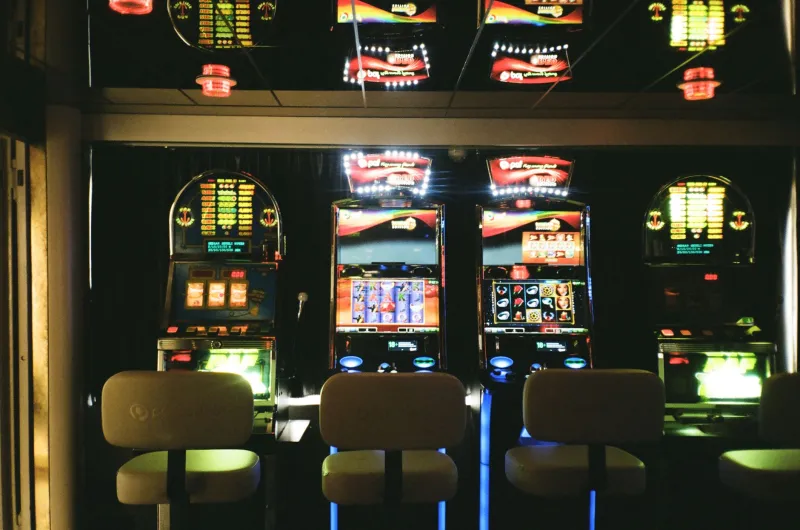
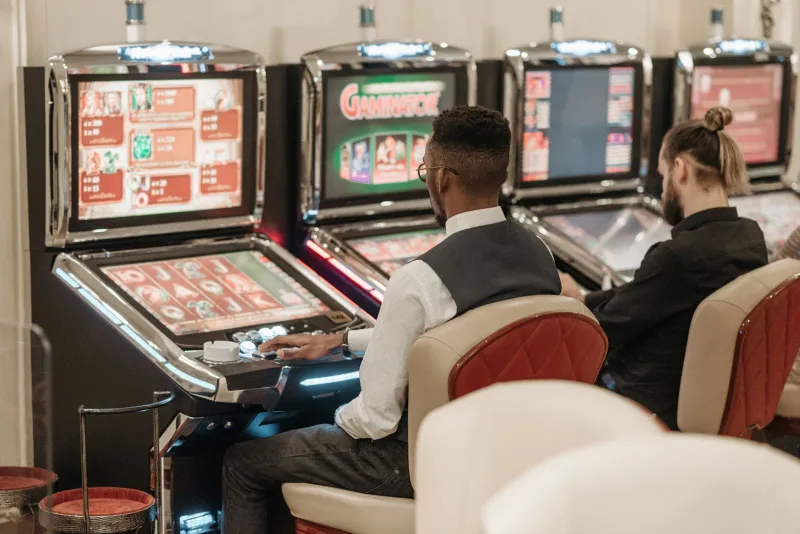
There's a slot machine at your favorite casino — maybe it's online, maybe it's at a brick-and-mortar spot down the highway — and you've sat in front of it so many times you could describe every animation from memory. You know the bonus round trigger. You know the sound it makes when it's about to pay out. Except, of course, it doesn't actually make that sound. You just think it does.
This is the comfort zone trap in action, and it's one of the most quietly expensive habits a casino player can develop. At DF999i, we're built around the idea that your lucky number starts somewhere — but it doesn't stay in the same place forever. Neither should your game selection.
What Anchoring Actually Does to Your Brain
Psychologists call it the anchoring effect: the very human tendency to over-rely on the first piece of information — or the first experience — we encounter when making decisions. In casino terms, this usually means the first game that gave you a significant win, or the first game you learned to play, becomes your psychological anchor point.
From that moment on, every other game gets evaluated against that anchor. New games feel riskier. Unfamiliar rules feel like a disadvantage. The house edge on your anchored game might be 10% worse than an alternative sitting three clicks away, but your brain doesn't register that math. It registers comfort.
And comfort, in a casino environment, is almost never free.
The Illusion of Mastery
Here's where it gets particularly interesting. The longer you play a specific game, the more you start to feel like you're getting good at it. For games with genuine skill components — poker, blackjack, video poker — that feeling can be legitimate. But for the majority of casino offerings, including most slots, roulette, and straightforward table bets, what you're actually developing isn't skill. It's pattern recognition applied to random events.
Your brain is an extraordinary pattern-detection machine. It was built for a world where patterns mattered — where rustling grass meant a predator and where seasonal cycles predicted food. Drop that same brain into a random number generator environment, and it will find patterns whether they exist or not.
So when you've played the same video poker variant for 200 hours, you don't actually have an edge. You have the feeling of an edge, which is a very different thing. And that feeling is exactly what keeps you seated at a game that might be delivering worse expected returns than alternatives you've never bothered to explore.
The Real Cost of Staying Put
Let's put some rough numbers around this. Say you're a slots player who gravitates exclusively toward a specific themed game with a 94% RTP (return to player). That sounds decent, right? But there are plenty of slots — even on the same platform — running at 96%, 97%, or higher. Over the course of a session where you're cycling $500 through the machine, that 2-3% difference in RTP translates to meaningful money left on the table.
Multiply that across weekly sessions, and your comfort zone is costing you real cash. Not because you're playing badly, but because you're not playing differently.
The same dynamic applies to table games. Players who stick exclusively to American roulette because they learned on it are paying a 5.26% house edge when European roulette — with a single zero — cuts that number nearly in half. Familiarity with the double-zero wheel doesn't make it spin more favorably for you.
Why We Resist Switching
If the math is this clear, why don't more players just move around? A few reasons, and they're all deeply human.
Loss aversion plays a huge role. Switching games means entering unknown territory, and unknown territory carries the psychological weight of potential loss. Even if your current game is consistently bleeding you dry, the known loss feels safer than the unknown risk of something new.
Sunk cost thinking compounds the problem. The hours you've spent learning a game feel like an investment, and abandoning that game feels like writing off that investment. But time spent on a negative-value activity doesn't become positive just because you've spent a lot of it.
Social identity is the sneakiest factor of all. Many players define themselves by their game. They're "a slots person" or "a craps guy" or someone who "only plays Texas Hold'em." Switching games isn't just a strategic adjustment — it feels like an identity shift. And people resist those at a surprisingly deep level.
Breaking the Pattern Without Losing Your Mind
The good news: you don't have to blow up your entire approach to start benefiting from broader game awareness. A few practical moves can make a genuine difference.
Run a quick RTP audit. Whatever games you currently play, look up their published RTP or house edge figures. Then spend 15 minutes looking at alternatives in the same category. You might be surprised how much variance exists between similar-seeming games.
Set a deliberate exploration budget. Allocate a small, fixed portion of your session bankroll — say, 10-15% — specifically for trying a game you've never played before. This keeps the psychological risk low while opening the door to new options.
Separate comfort from competence. Ask yourself honestly: am I good at this game, or am I just comfortable with it? For most casino games, the answer is the latter, and that's okay — but it should change how you think about loyalty to any particular title.
Give new games a real sample size. One bad session on an unfamiliar game doesn't mean it's wrong for you. Variance is real. Give any new game enough sessions to form a genuine impression before you write it off.
Your Lucky Number Moves Around
At DF999i, the whole point is that the number that works for you isn't fixed. It changes based on the game, the session, the moment. Rigidly attaching yourself to one corner of the casino — digital or physical — is the opposite of that mindset.
The players who do best over the long run aren't the ones who found their game and stuck to it forever. They're the ones who stayed curious, kept evaluating, and refused to let comfort masquerade as strategy.
Your comfort zone might feel like home base. But in casino terms, home base is just where you're standing when you're not moving forward.