You're Not Reading the Table — Your Brain Just Wants You to Think You Are

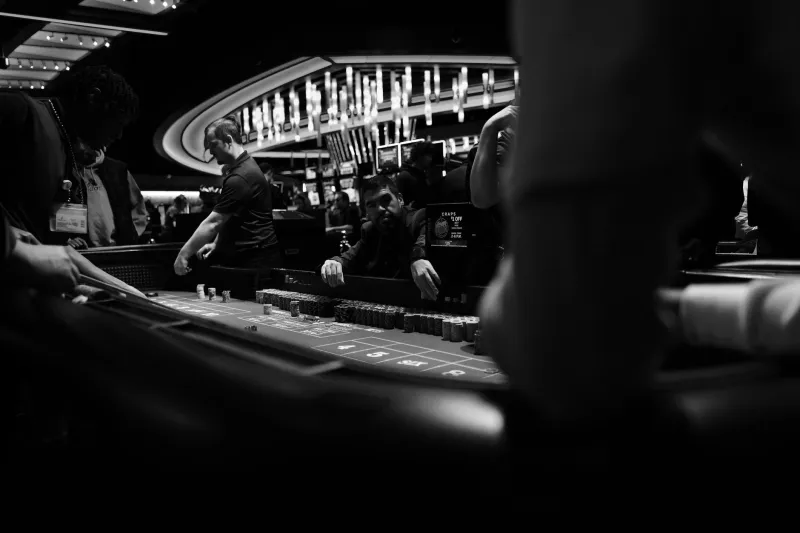
You've been at the blackjack table for two hours. The dealer has busted four times in the last six hands. You lean back, study the shoe, and feel it — that low hum of certainty. Another bust is coming. You double your bet.
This moment, right here, is where casino psychology gets genuinely fascinating. Because you're not being reckless. You're not being careless. You're being completely, utterly human — and that's exactly the problem.
The illusion of control doesn't announce itself. It doesn't tap you on the shoulder and say, hey, you're about to make a decision based on nothing. It slides in quietly, dressed up as pattern recognition, experience, and instinct. And for players at every level — from first-timers at DF999i Casino to seasoned regulars who've logged thousands of hours — it's one of the most persistent traps in the game.
What the Research Actually Says
Back in 1975, psychologist Ellen Langer coined the phrase "illusion of control" after a series of experiments showed that people consistently behave as though they can influence outcomes that are purely random. Subjects given a choice of lottery tickets held onto them longer and demanded more money to sell them — even though the odds were identical to tickets they hadn't chosen. The act of choosing made them feel invested in the outcome.
Fast-forward to modern neuroscience, and the picture gets even more interesting. Imaging studies have shown that the brain's reward circuitry activates not just when we win, but when we almost win — and critically, when we feel like we predicted something correctly. The dopamine hit from "I knew that was coming" is real, even when the prediction was made retroactively.
In other words, your brain is literally rewarding you for a skill you don't have.
The Memory Edit You Don't Know You're Running
Here's a question: how many times have you walked away from a session thinking, I should've trusted my gut? Now flip it — how many times did you trust your gut and it was dead wrong?
If the first number feels bigger, that's selective memory doing its job. Cognitive scientists call this confirmation bias, and it's relentless. Our minds are wired to catalog the hits and quietly archive the misses. The three times you "sensed" a cold streak and pulled back? Vivid. The eleven times you sensed a cold streak, pulled back, and watched the table go on a run without you? Fuzzy at best.
This isn't a character flaw. It's evolutionary hardware. The human brain is a pattern-completion machine — it kept our ancestors alive by connecting dots fast, even with incomplete information. At the casino, that same machinery fires constantly, stitching together narratives from data that is, statistically speaking, just noise.
Clustering Illusion: When Random Looks Like a Trend
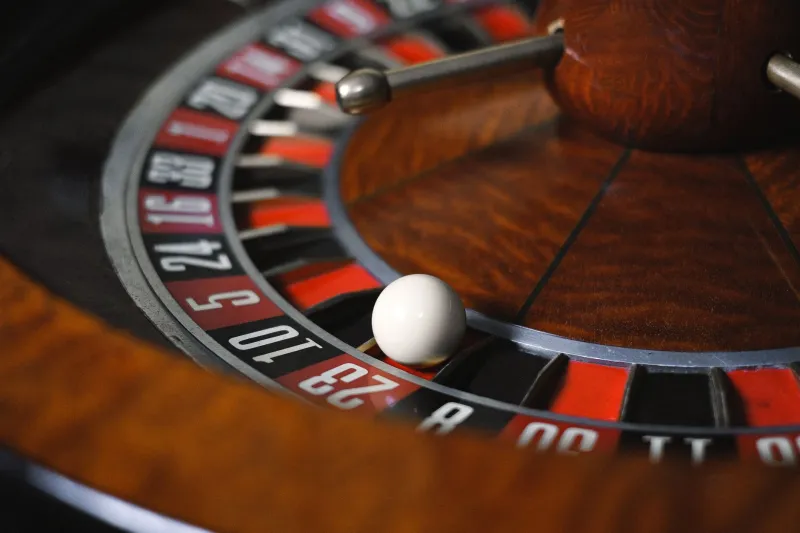
Pull up any roulette history board. You'll see streaks of red, clusters of odd numbers, gaps between certain digits. Your brain will start building stories immediately — red is running hot, 17 hasn't shown in a while, something's about to shift.
This is the clustering illusion at work. Random sequences don't look like what most people imagine randomness to be. True randomness produces clumps, streaks, and repetitions that feel meaningful because they look meaningful. Studies show that when people are asked to generate a "random" sequence of coin flips by hand, they alternate too much — because genuine randomness feels wrong to us intuitively.
A player who sees black come up seven times in a row at roulette faces two equally irrational responses: betting red because "it's due" (gambler's fallacy) or betting black because "it's hot" (hot hand fallacy). Both feel logical. Neither is. The wheel has no memory. The next spin is a fresh event with the same fixed odds it's always had.
Real Players, Real Patterns — None of Them Predictive
Talk to experienced casino regulars and you'll hear the same language over and over: reading the table, feeling the flow, knowing when to push. These aren't descriptions of strategy — they're descriptions of a story the mind has assembled in real time.
One longtime player described his process like this: "After a few hands, I can usually tell where the session is going. I watch how the dealer's moving, how the cards are falling. I adjust." When pressed on his win rate over time, he paused. "I mean, I'm up overall, I think. It's hard to track exactly."
That last sentence is the tell. When we can't accurately track outcomes, confirmation bias fills the gap. We remember the sessions where our reads "worked." We reframe the losses as anomalies, bad luck, or the one time we didn't trust ourselves enough.
Neuroscientist Read Montague's research on prediction errors suggests that the brain generates a kind of internal confidence score — and that score can become decoupled from actual accuracy over time. Basically, you can get very good at feeling like you know what's coming without getting any better at actually knowing.
The Smartest Players Fall Hardest
Here's the uncomfortable part: the illusion of control hits analytical thinkers especially hard. People who are data-driven, who work in fields that reward pattern recognition — finance, engineering, medicine — often bring those instincts to the table and find them misfiring in real time.
The casino environment is specifically designed to generate feedback. Sounds, visuals, near-misses, the rhythm of dealing — all of it creates a sensory stream that the analytical brain tries to decode. And because analytical thinkers are good at decoding actual patterns, they trust the process even when the signal is pure static.
The confidence isn't arrogance. It's competence applied in the wrong domain.
Honest Gaming Starts With Honest Self-Assessment
None of this means you should stop thinking at the table. Strategy is real. Bankroll management matters. Game selection affects your odds. These are legitimate variables.
But there's a clean line between strategy and prediction — and that line is where the illusion of control lives. Strategy asks: what's the statistically sound play given the rules of this game? Prediction asks: what's about to happen next? Only one of those questions has a useful answer.
The players who get the most honest value out of their time at the casino — whether they're playing slots, poker, or table games at DF999i Casino — are the ones who've made peace with that distinction. They play the math they can influence and release the outcomes they can't.
That's not resignation. That's the most sophisticated read at the table.